Today we are going to put a spotlight on a topic of critical importance to all parents of newborns…reducing the risks of Sudden Unexpected Infant Death (SUID). To enhance our understanding around this issue, we will review recent research and statistics along with recommendations from the experts. We will also talk about Baby Boxes, a new trend in US hospitals to reduce infant mortality. At Great Kids, Inc. this topic is a priority; thus, we will conclude today’s discussion by reviewing the specific Growing Great Kids Curriculum tools and resources that parents can incorporate to prevent SUID.
Let’s get started with some definitions. The Centers for Disease Control and Prevention (CDC) defines SUID as the death of an infant less than 1-year of age that occurs suddenly and unexpectedly, and whose cause of death is not immediately obvious before investigation. In 2015, the Centers for Disease Control and Prevention reported 3,700 SUIDs in the United States. SUIDs are reported as one of the three following types:
Sudden infant death syndrome (SIDS)
The sudden death of an infant less than 1-year of age that cannot be explained after a thorough investigation is conducted, including a complete autopsy, examination of the death scene, and a review of the clinical history. About 1,600 infants died of SIDS in 2015. SIDS is the leading cause of death among infants 1 to 12 months old.
Unknown cause
The sudden death of an infant less than 1-year old that remains undetermined because one or more parts of the investigation were not completed. About 1,200 infants died of Unknown Cause in 2015.
Accidental suffocation and strangulation in bed
In 2015, 900 deaths occurred due to accidental suffocation and strangulation in bed. The sudden death of an infant less than 1-year of age can happen because of
- Suffocation by soft bedding—for example, when a pillow or waterbed covers an infant’s nose and mouth.
- Overlay—when another person rolls on top of or against the infant while sleeping.
- Wedging or entrapment—when an infant is wedged between two objects such as a mattress and wall, bed frame, or furniture.
- Strangulation—for example, when an infant’s head and neck become caught between crib railings.
According to CDC data and statistics, the SUID rate has been in decline over the last 25+ years. Initiatives such as Safe Sleep Recommendations and Back to Sleep campaigns by the American Academy of Pediatrics reduced the SUID rates significantly between 1992-2009. However, the SUID rate increased slightly from 87.5 deaths per 100,000 live births in 2014 to 92.6 deaths per 100,000 live births in 2015 (CDC.gov, February 1, 2017).
In October 2016, the American Academy of Pediatrics announced the New Safe Sleep Recommendations, which include
- Place the baby on his or her back on a firm sleep surface such as a crib or bassinet with a tight-fitting sheet.
- Avoid use of soft bedding, including crib bumpers, blankets, pillows, and soft toys. The crib should be bare.
- Share a bedroom with parents, but not the same sleeping surface, preferably until the baby turns 1 but at least for the first six months. Room-sharing decreases the risk of SIDS by as much as 50 percent.
- Avoid baby’s exposure to smoke, alcohol, and illicit drugs (AAP.org, October 16, 2016).
Now let’s talk about a new trend in US hospitals intended to reduce SUID risks. Several hospitals across the nation now provide free cardboard boxes where babies can sleep safely, along with education resources and basic baby necessities. This year the state of New Jersey plans to distribute105,000 boxes; Ohio, 140,000; Alabama, 60,000 (Cleveland.com, March 2017) along with hospitals in other major cities including Philadelphia and San Antonio, Texas. According to NBCNews.com, proponents of baby boxes say the combination of educational tools and free resources will reduce America’s infant mortality rate (NBCNews.com, March 2017).
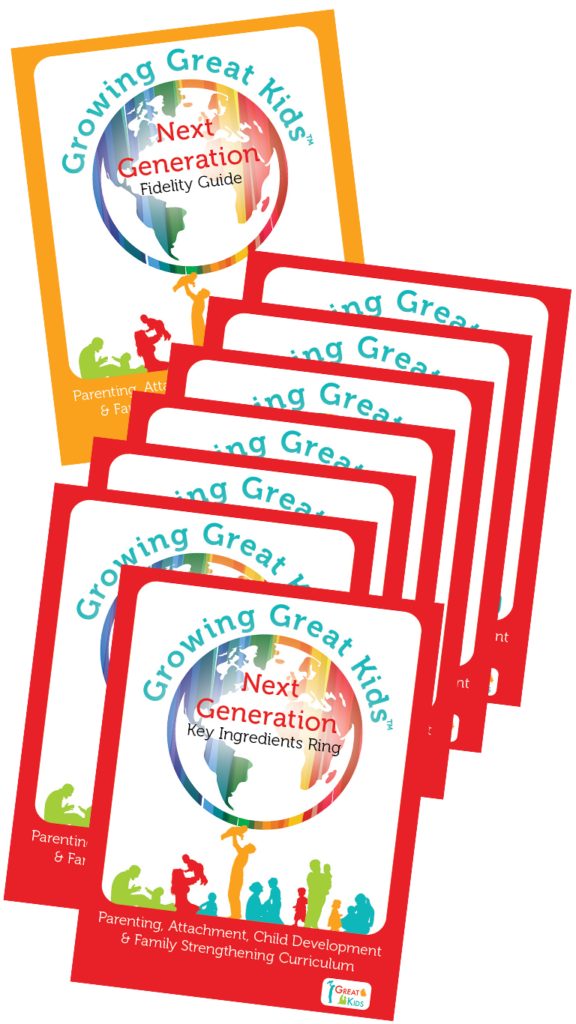
Here are the highlights of a few of the many GGK tools and resources around this topic.
Growing Great Kids Prenatal
Unit 3: Module 7-The Baby is Coming Home…Get Ready!
Preparations for bringing the baby home, including supplies for basic care such as sleeping
Unit 4: Module 6-Cultural Influences on Caring for Infants.
Explores the family’s cultural influences on infant sleeping practices
Growing Great Kids B-12 Months Manual
0-3 Months: Basic Care – Sleeping.
Discusses normal sleep patterns for infants, explores parents’ opinions regarding sleeping, provides researched information regarding prevention of SIDS, and provides infant sleeping safety guidelines
0-3 Months: Basic Care – Infant Safety Tips Handout.
Explores Safe Sleep Guidelines and information on SIDS
7-9 Months: Basic Care – Home Safety Checklist Handout.
Encourages parents to complete a home safety checklist and remove safety hazards
Check them out! These are great resources to share with parents. While SIDS can happen to anyone, it is also true that every family can make their baby’s sleep environment safer through simple preventative measures.
Works Cited:
Centers for Disease Control and Prevention (2017). About SUID and SIDS. Retrieved from https://www.cdc.gov/sids/AboutSUIDandSIDS.htm
American Academy of Pediatrics (2016). AAP Announces New Safe Sleep Recommendations to Protect Against SIDS, Sleep-Related Infant Deaths. Retrieved from https://www.aap.org/en-us/about-the-aap/aap-press-room/pages/american-academy-of-pediatrics-announces-new-safe-sleep-recommendations-to-protect-against-sids.aspx
Cleaveland.com (2017). Ohio becomes 2nd state to offer free baby boxes to curb infant deaths. Retrieved from https://www.cleveland.com/metro/index.ssf/2017/03/free_baby_boxes_offered_to_ohi.html
NBCNews.com (2017). Hospitals Give Away Baby Boxes to Curb Infant Mortality. Retrieved from https://www.nbcnews.com/news/us-news/hospitals-u-s-give-away-free-baby-boxes-curb-infant-n732421
Photo by Andrew Branch on Unsplash